The ServiceTitan Integration Problem
Every week, I get the same question from plumbers and HVAC techs: "Can your AI receptionist actually work with ServiceTitan, or does it just dump leads into a spreadsheet like everyone else?"
Fair question. Most AI answering services claiming "CRM integration" are basically fancy contact forms. They capture a name and phone number, maybe squeeze out what kind of service the customer needs, then fire it into a lead queue for someone to manually process later.
That's not integration. That's digital paperwork.
Real ServiceTitan integration means the AI can pull up existing customer records, check technician availability, create jobs with proper categorization, and dispatch the right crew — all while the customer is still on the phone. No manual data entry. No lag time. No "we'll call you back to schedule."
Here's how Radar actually does it.
The Technical Stack That Makes It Work
Building a proper ServiceTitan integration isn't just about API calls. The challenge is orchestrating multiple systems in real-time while maintaining a natural conversation flow.
Voice to Intelligence Pipeline
When a call comes into Radar, here's what happens under the hood:
- ElevenLabs handles the voice layer — converts speech to text, generates natural AI responses that don't sound robotic
- Claude AI processes the conversation — understands context, extracts customer info, determines urgency and service type
- ServiceTitan API integration fires in parallel — lookup customer records, check availability, create jobs
- Real-time dispatch coordination — alerts the right technician via SMS, Discord, or Slack
The magic happens in the orchestration. While Claude is having a natural conversation with the customer, it's simultaneously making API calls to ServiceTitan. By the time the customer finishes explaining their problem, Radar has already:
- Looked up their service history
- Identified available technicians in their area
- Categorized the job type and priority level
- Prepared to book the appointment
The ServiceTitan API Deep Dive
ServiceTitan's API is powerful but complex. It's not enough to just POST a lead object and call it done. Proper integration requires:
Customer lookup and deduplication: Before creating anything, Radar searches ServiceTitan for existing customer records using phone number, address, or business name. This prevents duplicate customers and pulls up service history that Claude can reference during the conversation.
Dynamic job categorization: Different ServiceTitan setups use different job types, business units, and priority levels. Radar learns each customer's specific ServiceTitan configuration during onboarding, so it creates jobs with the right categories and routing rules.
Real-time availability checking: This is where most integrations fail. Radar doesn't just create a job and hope someone picks it up. It actively checks technician schedules, service areas, and skill sets to suggest realistic appointment times.
Proper job dispatch: Emergency calls get flagged immediately. Routine maintenance gets scheduled appropriately. The AI understands the difference and routes accordingly.
Why Most AI Phone Systems Can't Do This
The technical hurdles are significant. Building a ServiceTitan integration that actually works requires:
Real-time processing power: You can't pause the conversation while making API calls. Everything has to happen in parallel, which means sophisticated async processing and state management.
ServiceTitan API expertise: Their API documentation is comprehensive but complex. Understanding job lifecycles, customer data models, and dispatch workflows takes months of hands-on experience.
Custom configuration per business: No two ServiceTitan setups are identical. Each customer has different job types, technician hierarchies, and workflow preferences. Cookie-cutter integrations don't work.
Error handling and fallbacks: API calls fail. Networks hiccup. ServiceTitan goes down for maintenance. The AI needs graceful fallbacks that don't break the customer experience.
Most AI phone companies are building horizontal products that work "okay" with dozens of different CRMs. We built Radar specifically for field service businesses, which lets us go deep on integrations that actually matter.
Real-World Example: Emergency Dispatch
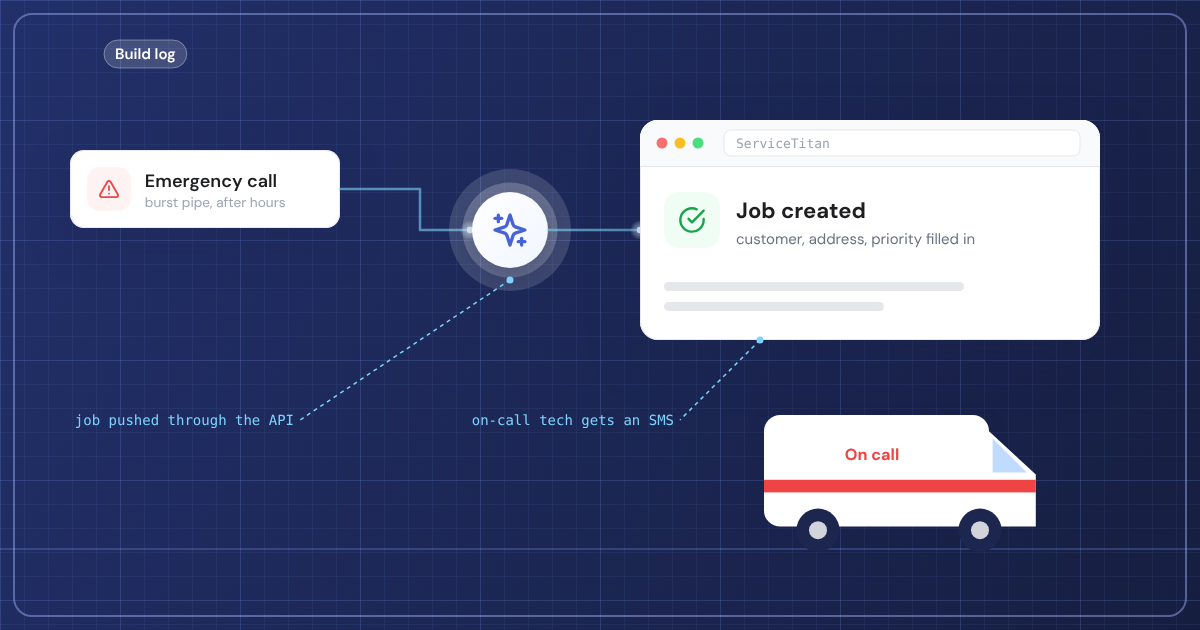
Here's how this plays out in practice. Let's say Mrs. Johnson calls at 11 PM with a burst pipe:
- Radar identifies the emergency: Claude picks up keywords like "flooding," "burst pipe," "water everywhere" and immediately flags this as high-priority
- Customer lookup: API call to ServiceTitan finds Mrs. Johnson's record — she's a regular customer, last service was 6 months ago
- Technician dispatch: Radar checks who's on emergency call rotation, confirms availability, and creates an emergency job in ServiceTitan
- Multi-channel alerts: Simultaneous notifications to the on-call plumber via SMS, Discord alert to the team channel, job appears in ServiceTitan with full customer context
- Customer communication: Mrs. Johnson gets an ETA and the technician's contact info before she even hangs up
Total time from call pickup to dispatch: under 60 seconds. No human intervention required.
The Copilot Mode Advantage
Not every business wants full AI automation. Some prefer keeping a human receptionist on calls but want to eliminate the manual data entry afterwards.
That's where Radar's Copilot Mode shines. The human handles the conversation while Radar works behind the scenes:
- Extracts customer info and job details in real-time
- Looks up ServiceTitan records automatically
- Suggests what questions to ask next
- Queues up job creation with all the right categories and routing
- After the call: one-click confirmation creates everything in ServiceTitan
This gives you the best of both worlds — human touch with AI efficiency. Most AI phone systems force you to choose between human or AI. Radar lets you use both together.
Built for Field Service Businesses
The difference between Radar and generic AI phone systems isn't just technical — it's philosophical. We built this specifically for independent plumbers, electricians, HVAC techs, and small service businesses who live and breathe ServiceTitan.
Your ServiceTitan setup becomes part of Radar's brain. Your job types, your technician skills, your service areas, your pricing — all of it gets trained into the AI during onboarding. When customers call, they're talking to an AI that understands your business as well as your best employee.
Ready to see how Radar plugs into your ServiceTitan setup? Let's talk — I'd love to walk you through the integration and show you what real ServiceTitan automation looks like.